
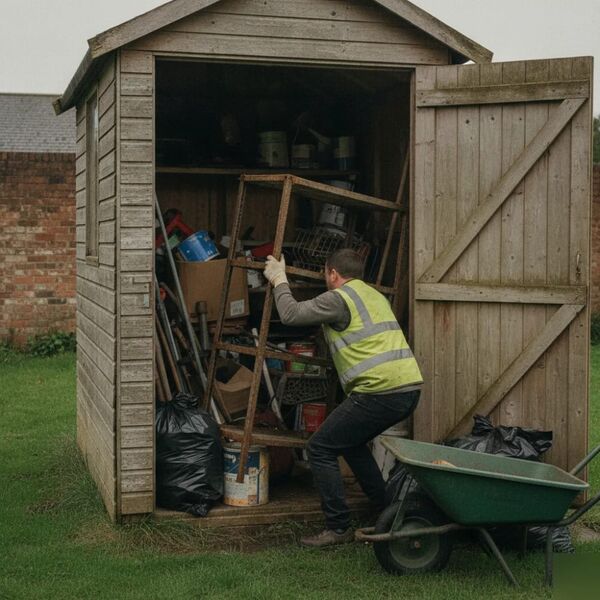
Shed Contents Versus Structure Removal: Two Different Jobs
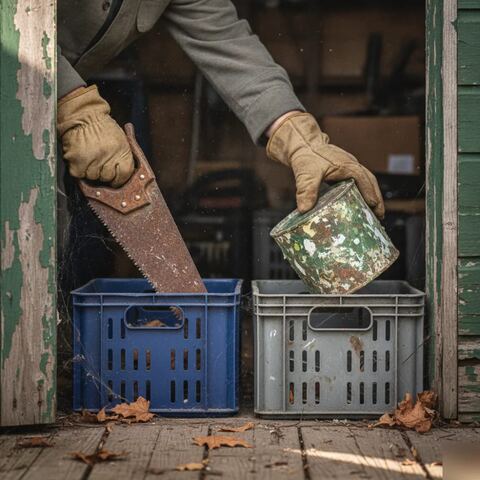
One of the most common points of confusion when booking shed clearance in Tunbridge Wells is the assumption that "clearing a shed" always means the same thing. In reality, there are two separate jobs on offer. Many local clearance firms blur the distinction in their quotes, leaving customers with a nasty surprise when the invoice arrives or, worse, a rotting timber carcass still standing in the garden after the "clearance" is complete. Understanding this split before you book is the single most useful piece of knowledge a homeowner can have.
The first job is contents-only clearance. This covers everything stored inside the shed: old paint tins, broken lawnmowers, bikes, tools, garden furniture, timber offcuts, plant pots, and the inevitable decade of miscellaneous items that accumulate in any outbuilding. A contents clearance leaves the shed structure itself standing, empty and swept out, ready for reuse, resale, or a future decision about its fate. This is typically the quicker, cheaper option and suits anyone simply wanting to reclaim usable storage space or tidy up before selling a property.
The second job is full structure removal. This includes emptying the contents but then goes further: dismantling the shed panels, roof felt, floor bearers, and often a concrete or slabbed base, followed by disposal of all the resulting timber, felt, and glass waste. This is a substantially more involved job requiring different tools, more time on site, and specific waste transfer arrangements for treated timber and roofing felt. These can't simply go into a standard skip alongside household waste.
This distinction matters enormously in a town like Tunbridge Wells, where the housing stock skews older than the national average. In conservation areas such as St John's and Broadwater Down, many Victorian and Edwardian properties still have their original outbuildings tucked at the rear of long gardens. These sheds are often 80 to 100 years old, built from timber that has spent a century absorbing damp Wealden clay ground moisture. In our experience clearing gardens across these areas, a large proportion of these structures are beyond a simple tidy-up: the roof felt has perished, the base timbers have rotted into the soil, and the whole structure is often unsafe to enter, let alone reuse. For these properties, contents-only clearance is rarely the end of the story. Homeowners typically need to budget for full dismantling and removal from the outset, rather than discovering mid-job that the shed itself has to come down too. A reputable local clearance company should assess this at quotation stage, not after arriving on site, so always ask explicitly which of the two jobs you are booking.
Signs Your Shed Needs Professional Clearance, Not a DIY Skip Run
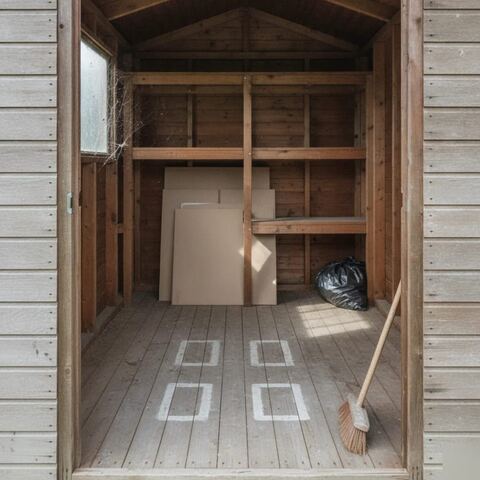
A quick tidy with a bin bag works fine for a shed with a few flowerpots and an old hose. But that's not what most people are dealing with. So how do you know when it's time to call someone rather than spend a Saturday on it yourself?
Start with weight and access. Sheds behind period properties in Langton Green or on the older plots around Southborough often sit at the end of a narrow side return, past a gate that's barely wide enough for a wheelbarrow. If you can't get a skip anywhere near the shed, you're carrying everything by hand anyway - and that changes the maths fast.
Then there's what's inside. We see this every week: paint tins gone solid, old creosote, petrol for a mower that stopped running years ago. That's not stuff you can just chuck in a skip. Garden chemicals and fuel need sorting properly, and a skip firm will reject the load if they spot it.
Rot is another one. If the shed floor's gone soft or there's a smell when you open the door, chances are something's been nesting in there. Nobody wants to find that out halfway through a clearance.
- The shed's part of a bigger job, like a garden clearance or overgrown garden clearance after a house has stood empty
- You've inherited the property and don't know what's safe to handle
- There's broken glass, sharp tools, or rusted metal mixed in with everything else
- You need it gone this week, not whenever a skip slot comes free
If your shed is just a few empty pots and a deckchair, do it yourself. Genuinely. Save your money. But once it's fuel, rot, or a gate that won't take a wheelbarrow, that's when a call makes more sense than a Saturday lost to it.
What Happens During a Shed Clearance, Step by Step

Sheds get forgotten. Then someone puts a house on the market, or a parent passes away, and suddenly that shed at the bottom of the garden in Pembury or Langton Green is full of forty years of paint tins, broken mowers, and things nobody can quite identify anymore. Here's what happens once you call us.
- We ask a few quick questions. Size of the shed, roughly what's in it, whether there's anything hazardous like old paint or petrol. This helps us plan the job before we even arrive.
- We give you a time. Same-week availability is usually possible, which matters when you're trying to hit a completion date or a probate deadline.
- We sort on site. Anything usable, tools, garden furniture, plant pots, gets set aside for charity donation. Nothing gets skipped unnecessarily just because it's quicker to bin it.
- We load and remove everything. Timber, old carpet underlay, rusted brackets, the lot. We carry it out, you don't lift a thing.
- We leave you a waste transfer note. Proof it's gone through the right channels. Fully licensed waste carriers have to provide this, and you should always ask for it.
Most single sheds take under an hour. A packed one behind a period property in Cranbrook, with decades of accumulated garden kit, can run longer, but we work at your pace, not a stopwatch.
One thing surprises people every time.
They expect us to just want the "easy" stuff. We don't. Broken furniture, rotted timber, rusted mower parts, we take it all in one visit so you're not left with a pile by the fence wondering who's collecting the rest.
Hazardous Items Commonly Found in Long-Untouched Sheds
When a shed hasn't been opened in earnest for five, ten, or even twenty years, what lies inside is rarely just old deckchairs and forgotten flowerpots. Sheds have a habit of becoming the default storage point for anything a household doesn't quite know what to do with, and over time that accumulation frequently includes genuinely hazardous materials that cannot simply be tossed into a wheelie bin or taken to the tip in a bin bag. For homeowners across Tunbridge Wells, Rusthall, Southborough, and the surrounding villages, understanding what's likely lurking in a long-neglected shed is the first step towards a safe, compliant clearance.
Old paint tins are perhaps the most universal culprit. Gloss paints, wood preservers, and creosote-based treatments from decades past often contain solvents, lead, or other compounds that are now tightly regulated. A tin that's half-solidified or rusted through still counts as hazardous waste and needs to go via a household waste recycling centre's designated chemical drop-off or a licensed waste carrier, never mixed in with general household waste. Alongside paint, garden chemicals are a near-constant find: bottles of slug pellets, glyphosate-based weedkillers, ant powders, and rose treatments that have long since lost their labels or become unstable with age. Pesticides in particular demand careful handling. Older formulations may contain active ingredients that have since been banned or restricted, so they cannot be poured away, buried, or burned under any circumstances.
Batteries are another recurring hazard, especially in sheds that once housed power tools, torches, or radios. Old nickel-cadmium and lead-acid batteries can leak corrosive material as their casings degrade, and they require separate collection through battery recycling points rather than standard bin routes. Similarly, aerosol cans, old motor oil, white spirit, and petrol left over from strimmers or mowers all fall outside normal collection and need specialist disposal.
A distinctly local factor makes this problem more pronounced in Tunbridge Wells than in many other parts of the South East. The town sits largely on Wealden clay geology, as mapped by the British Geological Survey's Wealden Group, and clay-heavy ground retains moisture far longer than sandier or chalk-based soils. This persistent dampness accelerates timber rot in shed bases and frames. It also creates the humid, enclosed conditions in which old containers corrode, labels dissolve, and lids fail. A shed that might have stayed structurally sound and tidy for decades on free-draining ground can, on Wealden clay, become a genuinely hazard-holding structure far sooner. Professional clearance becomes a safety necessity for many local properties, not just a tidying exercise.
How Shed Clearance Pricing Works
Shed clearance costs in Tunbridge Wells, as with most of the South East, are typically calculated using one of three standard trade pricing models. Understanding these structures before you contact a clearance firm puts you in a far stronger position to compare quotes fairly and avoid unexpected charges on the day of collection.
Volume or Load-Based Pricing
The most common approach across the waste clearance industry is volume-based pricing, where cost is determined by how much space your items take up in a van or skip, usually expressed in cubic yards or as a fraction of a load (quarter load, half load, full load). This model reflects the fact that tipping fees at licensed waste facilities are themselves charged by volume and weight, so clearance firms pass this cost structure on to customers. A single small shed with a few garden tools will naturally cost less than one packed with furniture, paint tins, and old machinery.
Per-Item Pricing
Some traders, particularly those handling smaller domestic jobs, prefer per-item pricing, where a flat fee is quoted for each object removed - an old mower, a workbench, bagged waste, and so on. This model suits sheds with a small, clearly defined number of items but becomes less economical for a fully packed structure, where volume-based pricing usually works out more cost-effective.
Estimate-Based Quoting
For larger or more complex jobs, especially where the shed itself is being dismantled and removed, not just emptied, firms typically provide an estimate following photos or an on-site visit. This is standard trade practice because dismantling introduces variables that flat pricing can't account for.
What Drives the Cost
- Volume of contents, more material means more loads and higher tipping fees
- Structure dismantling, removing the shed itself requires additional labour and time versus a simple contents-only clearance
- Access difficulty, narrow side passages, steps, or long carry distances common in older Tunbridge Wells properties can increase labour time
- Hazardous items, old paint, chemicals, asbestos-containing roofing sheets, or treated timber often require specialist disposal and incur surcharges
Questions Worth Asking Before You Book
- Is this a fixed price or a variable estimate subject to change on the day?
- Does the quote cover contents only, or does it include dismantling and removing the shed structure itself?
- Are tip and disposal fees already included, or charged separately?
- Is there an additional charge for hazardous materials such as old paint tins or asbestos-containing panels?
Asking these questions upfront means the figure you're given reflects the full scope of work, rather than a partial estimate that grows once the job is underway.
Find Us in Tunbridge Wells
Based in Tunbridge Wells, we cover towns across Kent and Sussex including Tonbridge, Sevenoaks, Crowborough, Paddock Wood and beyond.
Frequently Asked Questions
Same-week slots are usually available once you call. This helps if you're working to a house sale date or a probate deadline. We ask about the shed size and what's inside before we arrive, so we can plan the job properly. That means less time on site guessing and more time clearing. If your shed has fuel, paint, or rot inside, tell us upfront so we bring the right disposal arrangements with us.
We do both, and the difference matters a lot. Contents-only clearance empties the shed and leaves the structure standing, swept and ready to use. Full structure removal goes further, taking down the panels, roof felt, and base too. Many older sheds in Tunbridge Wells, especially around St John's and Broadwater Down, are too rotten to keep. Always ask which job you're booking so there's no surprise once we're on site.
We sort everything on site first, setting aside anything usable for charity donation. Then we load and remove the rest, timber, old tools, rusted brackets, all of it, so you don't lift a thing. Most single sheds take under an hour, though a packed shed behind a period property in Cranbrook can run longer. We leave you a waste transfer note afterwards, proof it's gone through proper licensed channels.
Because a lot of them are 80 to 100 years old and beyond saving. Properties in areas like Langton Green and Southborough often have original outbuildings that have sat on damp Wealden clay ground for decades. The base timbers rot into the soil and the roof felt perishes, making the shed unsafe to enter. In these cases, contents clearance alone won't solve the problem. The structure usually has to come down too.
Yes, and this is something a standard skip can't handle. Garden chemicals, creosote, and old mower fuel need proper sorting and can't go in with household waste. Skip firms will reject a load if they spot it. We identify these items before starting and dispose of them through the correct waste channels. If your shed has sat unused for years, it's worth mentioning anything like this when you first call.
Yes, this is common in older Tunbridge Wells gardens with narrow gates and long plots. When a skip can't get near the shed, everything has to be carried out by hand instead. We're used to this kind of access and plan for it when we quote the job. It's exactly the sort of situation where a DIY skip run stops making sense and a proper clearance team saves you the hassle.