
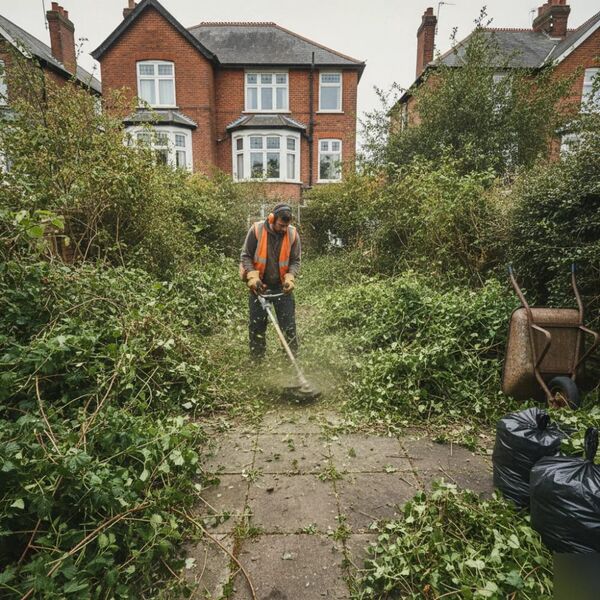
Spotting the Signs of a Truly Overgrown Garden
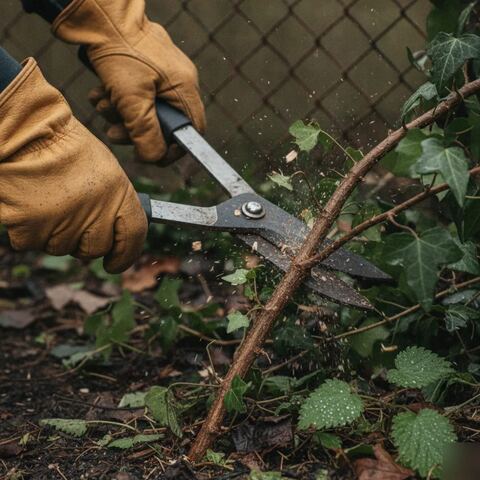
You already know something's wrong. Maybe you've inherited a property in Tunbridge Wells and the estate agent mentioned "the garden needs work." Maybe you've been away for a year and the back of the house has disappeared behind a wall of green. Or maybe it's just crept up on you, season by season, until you can't see the fence anymore.
A garden needing a tidy is different from one needing a proper clearance.
You can mow a neglected lawn yourself. A weekend job won't cover it when brambles take hold of old flower beds. Or when ivy pulls itself up brickwork and into guttering. Self-seeded saplings pushing through patio slabs also need more. We see this every week, particularly in older period properties around Tunbridge Wells Common. Large rear gardens here often back onto mature trees, and growth accelerates fast in the heavy Wealden clay.
Here's what to look for:
- Ground-level paths and patios completely hidden under moss, weeds, or creeping plants
- Bramble and bindweed growth tangled through fencing, sheds, or outbuildings
- Self-seeded trees growing where they shouldn't - through decking, against walls, into drains
- Garden structures like greenhouses or raised beds buried under vegetation and no longer visible
Often, it's the same story. Someone couldn't manage the garden any longer. The property sat empty for a few months, and nature took over. One growing season in Kent's mild, wet climate can turn a manageable space into an overwhelming one. Once brambles root into a shed base, or ivy works behind fascia boards, you're dealing with potential property damage. It's more than just an untidy plot.
Not sure if your garden counts as overgrown? If you struggle to walk from the back door to the bottom fence, it likely does. You don't need to worry about judging it yourself; that's what the quote visit is for.
When a Quick Tidy Is All You Need
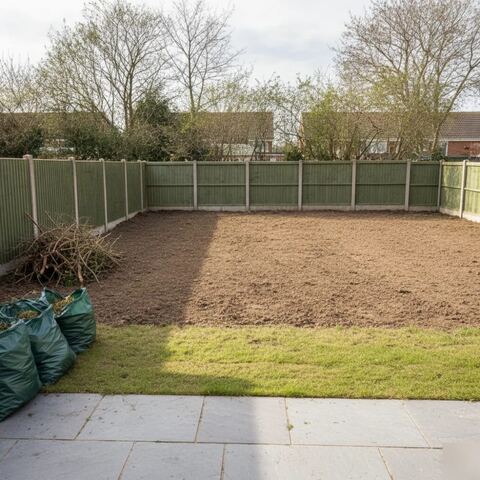
Not every overgrown garden needs a full clearance. Sometimes it's just a few months of missed mowing and some borders that got away from you.
If you can still see the path, the fences are clear, and there's no major woody growth, a strimmer and a weekend might be enough. We'd rather tell you this upfront than charge you for unnecessary work. A garden left over one summer is usually recoverable with basic tools. Knee-high grass, some dandelions, a few nettles pushing through the beds - that's a tidy-up, not a garden clearance.
So how do you know where the line is?
Here's what pushes a garden from "quick tidy" into proper clearance territory. Bramble that's rooted into fencing or brickwork. Self-seeded trees growing through sheds or against walls. Ground elder or Japanese knotweed spreading across boundaries. Piled green waste that's been sitting so long it's composted into the soil underneath. If you're seeing any of that, a strimmer won't cut it.
We get calls from people in Southborough and Pembury who've let things go over a single winter. Typically, those gardens just need cutting back and the waste taking away. A couple of hours, and you'd never know it had been left. But gardens attached to inherited properties or void rentals around Tunbridge Wells tell a different story. Period properties with large plots can go from tidy to wilderness in one growing season. This is especially true on the clay-heavy soil common across the High Weald. Growth is fast here from April through October.
If you're not sure which side your garden falls on, send us a few photos. We'll tell you straight. If it is just a tidy, we'll say so. One less thing to worry about either way.
What Overgrown Garden Clearance Involves

Most people picture someone turning up with a strimmer. It's a lot more than that.
Overgrown garden clearance means stripping a garden back to a workable state. This often involves bramble thickets taller than you, self-seeded trees pushing through old fence lines, ivy pulling at brickwork, or ground elder matted across every border. In Tunbridge Wells, the heavy Wealden clay holds moisture well into spring. Growth gets thick fast here. A garden left for two or three years can look like it's been abandoned for a decade.
We start by walking the site with you. That matters because there's often stuff buried under the growth. You might find old paths, raised beds, garden furniture, or even sheds hidden from view. Often, there's a pond or water feature hidden somewhere. We need to know what's under there before we start work.
Then the actual clearance happens in stages:
- Cut back all top growth - brambles, nettles, long grass, woody shrubs - down to ground level so we can see what we're working with.
- Remove self-seeded saplings and dead trees. Some period properties around Nevill Park have large gardens. Sycamore and ash seedlings take hold quickly there.
- Clear ivy from walls, fences, and outbuildings. This needs care because old mortar can come away with the roots.
- Dig out root systems where needed. Bramble roots left in the ground just come back.
- Load and remove all green waste from site. We are fully licensed waste carriers. You get proper waste transfer notes for everything that leaves your garden.
Here's what separates this from a regular garden tidy. We're not pruning. We're reclaiming ground. That means dealing with bulk - sometimes several tonnes of green waste from a single garden. A large detached property or an inherited house sat empty between probate can produce significant material. This might fill a full-size trailer three or four times over.
The garden doesn't need to be perfect when we leave. It needs to be usable. Ready for a landscaper, ready for a sale, or just ready for you to enjoy again. Nothing gets skipped unnecessarily - all waste goes where it should.
How Garden Clearance Costs Are Worked Out
Most overgrown garden clearance is priced on volume, not time. That means the cost depends on how much green waste and debris we remove from your property. A small courtyard behind a flat in Tunbridge Wells town centre costs far less than a half-acre plot behind a period farmhouse near Langton Green. Makes sense.
But volume isn't the only factor. Here's what else drives the price up or down.
Access is a big one. If we can back a vehicle right up to the garden, loading is quick and the job moves fast. If everything has to be carried through a narrow side passage or up steps, it takes longer. Older properties around the Pantiles and Mount Pleasant often have tricky rear access, so we always ask about this upfront.
The type of growth matters too. Soft green waste like long grass and annual weeds is light and quick to clear. Woody growth is different. Established bramble thickets, self-seeded trees, and old hedging that's grown out of control all take more effort to cut back. They also require more space in the vehicle. Often, it's the brambles that surprise people. They might look like a small patch from the kitchen window. Once you get in there, it's three metres deep with roots like cables.
Ground contamination can add cost as well. We sometimes find buried waste under the vegetation, things like old fence panels, broken concrete, or even asbestos sheeting from a demolished shed. That changes the disposal route and the paperwork. We are fully licensed waste carriers. We provide waste transfer notes for everything we remove, so you have a clear paper trail.
Most clearance companies in the industry price per load or per cubic yard. Some charge a day rate for larger jobs. The honest advice is to get a quote based on a site visit, not a phone estimate. Photos help, but nothing beats seeing the garden in person. We offer free, no-obligation quotes and can usually visit within the same week.
Ask any provider three things before you book: are they licensed to carry waste, where does the green waste go, and is the quote fixed or estimated? Those three questions save more trouble than anything else.
Licensed Waste Removal and Tree Rules in Tunbridge Wells
Garden clearance generates a lot of waste. We're talking trailer loads of bramble, old fence panels, broken concrete, soil, green waste, and sometimes things like asbestos sheeting hidden under ivy. You can't just bag it up and leave it on the kerb.
Find Us in Tunbridge Wells
Based in Tunbridge Wells, we cover towns across Kent and Sussex including Tonbridge, Sevenoaks, Crowborough, Paddock Wood and beyond.
Frequently Asked Questions
We can usually visit within a few days to look at the garden and give you a plan. Overgrown gardens often need a site visit first, since so much can be hidden under the growth. We walk the space with you, check for old paths, sheds, or ponds buried under brambles, and talk through what the job involves. This helps us plan the right crew and equipment before we start cutting anything back.
We start by cutting back all the top growth so we can see what we're dealing with. That means brambles, nettles, ivy, and any self-seeded saplings get taken down to ground level first. From there, we dig out root systems where needed and clear waste in stages. You don't need to do anything before we arrive. We bring everything required to load and remove green waste properly, with waste transfer notes for your records.
The heavy Wealden clay around Tunbridge Wells holds moisture well into spring, which pushes growth hard through the warmer months. A garden left for just one growing season, especially around properties near Tunbridge Wells Common or Nevill Park, can look abandoned for years. Sycamore and ash seedlings take hold fast in these large rear gardens. Once bramble roots into a shed base or ivy gets behind fascia boards, the clock starts running on property damage too.
If you can still see the path and fences with no woody growth, a tidy-up is probably enough. But once bramble has rooted into fencing, or self-seeded trees are pushing through sheds or walls, you're into clearance territory. Ground elder spreading across borders is another sign. If you're not sure which side your garden falls on, send us a few photos. We'll tell you if it's just a strimmer job.
All green waste gets loaded and removed from your property the same day we clear it. We are fully licensed waste carriers, so you get proper waste transfer notes for everything that leaves your garden. A large detached property or an inherited house left empty for a while can produce several tonnes of material, sometimes filling a full-size trailer more than once. Nothing gets left piled up or dumped on site once we've finished.