
- Probate House Clearance Explained: What It Covers and Who It's For
- Clearing a House Before Probate Is Granted: The Legal Timing Explained
- Signs You Don't Need a Full Clearance Service
- Clearing Period Townhouses in Tunbridge Wells: Access and Timing Challenges
- How Licensed, Insured Clearance Protects Executors From Liability
- Frequently Asked Questions
Probate House Clearance Explained: What It Covers and Who It's For

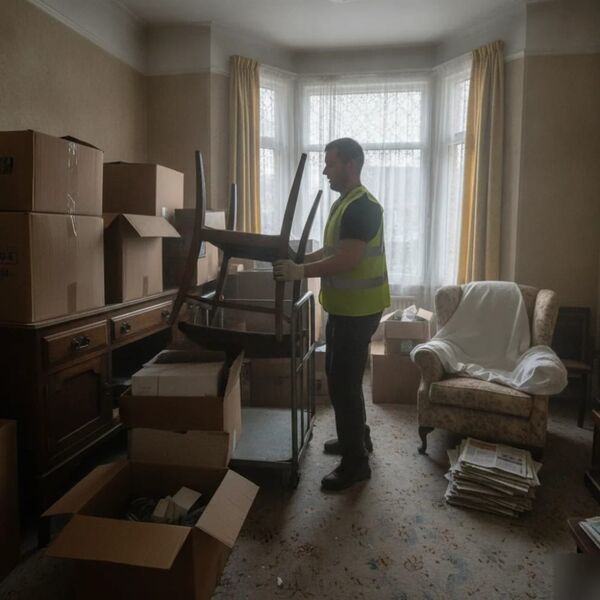
Probate house clearance is what happens after someone dies and their home needs clearing out before it can be sold, let, or handed over to the next person. It's not the same as a normal house clearance. There's often a solicitor involved, sometimes a probate valuation needed first, and usually a family member trying to make decisions from a distance while grieving. We handle this most weeks, and no two houses are the same.
This service is for you if you're an executor, a next of kin, or you've been asked by a solicitor to sort a property before probate completes. It covers everything inside the house: furniture, appliances, personal belongings, garden items, and anything left in a loft, garage, shed or cellar. Large detached houses in areas like Southborough or Pembury might take a full day. A period property with a cellar and outbuildings can take longer again.
What it doesn't cover is anything to do with the legal side of probate itself. We're not solicitors and we don't advise on estate law. Our job starts once you're ready for the physical clearance, whether that's before a valuation, after one, or once the property's confirmed to sell.
Not sure if you need probate clearance, or just a standard clearance? If there's a solicitor, an executor named, or the words "grant of probate" have come up, this is the one. If it's a straightforward downsize with no estate involved, that's a different job, and we can tell you which in a five-minute call. Either way, nothing gets skipped unnecessarily, and it's handled with care from the first visit.
Clearing a House Before Probate Is Granted: The Legal Timing Explained

Here's the question we get asked more than any other: can you clear the house before probate comes through? The honest answer is, it depends on what's in it.
Personal items with no real financial value, clothes, some furniture, everyday household bits, can usually be sorted and cleared before probate is granted. Anything that forms part of the estate itself, valuable jewellery, antiques, documents, or items named specifically in the will, needs to stay put until the executor has legal authority to act. That authority only exists once probate is granted. Clear too soon and you risk complications with the estate valuation, or worse, a dispute with other beneficiaries down the line.
This comes up often with families in Tunbridge Wells and Tonbridge, especially with period properties where there's often a loft full of decades of belongings nobody's catalogued yet.
So what should you do while you're waiting? A few things help:
- Get a rough idea of what's in the house before anything moves
- Keep any paperwork, deeds, and valuables untouched until the executor confirms it's fine to proceed
- Talk to us early. We can plan the clearance around your timeline, not the other way round
Most families want to get started the moment probate lands, sometimes the same week. That's fine. Same-week availability means we're not adding weeks of waiting on top of everything else you're dealing with. We'll work at your pace, not push you into a date that doesn't suit. If you're not sure whether something needs to wait for probate or not, ask us. We'd rather answer that question upfront than see a family run into a problem later.
Signs You Don't Need a Full Clearance Service

Not every job needs the full treatment, and it's worth saying that plainly. If you're just clearing out a garage, a shed or a loft full of boxes, that's a smaller job, not a full house clearance. We handle those separately, and they're usually quicker to sort.
Here's a good test. Walk through the property. If most rooms still have furniture, personal items and years of accumulated belongings in them, that's a proper clearance job. If it's really just one room, one space, or a handful of items left behind, you probably don't need the whole service.
Same goes if the estate is small. A one-bedroom flat with modest contents doesn't need the same approach as a five-bedroom period property packed with decades of belongings. The scale of the job should match the scale of the service, not the other way round.
And if you've already had family members take what they want, and what's left is a few bags for charity and maybe an old sofa, you might just need furniture removal and disposal rather than a full clearance.
Sorting through a home yourself first, even just the obvious personal items and papers, can save you money and let you keep what matters most without rushing. Some families want that time anyway, going through drawers and photos at their own pace before anyone else steps in. That's normal, and there's no rush on our end.
If in doubt, call and describe what you're looking at. We'll tell you straight whether it's a full clearance or something smaller. We'd rather point you toward the right service than push one you don't need.
Clearing Period Townhouses in Tunbridge Wells: Access and Timing Challenges
Tunbridge Wells is full of tall Victorian and Regency townhouses, three or four storeys, with narrow staircases that twist tighter near the top. Clearing one of these isn't like clearing a modern semi. Furniture that went up in pieces decades ago sometimes has to come down the same way. This is a regular challenge around the streets near Mount Ephraim and Calverley Park, where the terraces are handsome but the stairwells were never built with a wardrobe in mind.
Then there's parking. Many of these roads sit inside residents' permit zones, so a clearance van can't just pull up and stay put. We plan around that before we arrive, working out loading times and where we can legally wait without racking up a ticket. Cellars are another factor. Loft clearance and cellar clearance both come up constantly in these properties, because Victorian townhouses tend to have both, and probate estates often mean nobody's been up or down in years.
Timing matters more here than people expect.
A narrow staircase takes longer to clear safely, full stop. If a property has a shared access passage, or steps down to a lower ground floor kitchen, we build that into the schedule rather than guessing on the day. Rushing it risks damage to the property, the fixtures, or the walls on the way past. We're fully licensed waste carriers, so everything removed gets logged and disposed of properly. No shortcuts because a job's fiddly. Same-week availability still works for these properties. It just means we look at access first, then quote the time it'll take, not the time a straightforward house might take.
How Licensed, Insured Clearance Protects Executors From Liability
Here's something most people don't realise until they're knee-deep in it: as an executor, you can be held personally responsible if a house clearance goes wrong. Councils don't just chase the clearance company if items get fly-tipped. They can come after you, the person named on the grant of probate, because the duty of care for waste sits with whoever arranges its disposal.
That's why the paperwork matters as much as the muscle. Every load we take away gets logged with a waste transfer note, proof of where it went and how it was handled. If HMRC or the council ever asks questions about a probate clearance, you've got a record showing everything was disposed of properly. We're fully licensed waste carriers, so that documentation isn't an afterthought. It's built into the job.
Insurance matters just as much. Old Tunbridge Wells properties, especially the Victorian terraces with narrow staircases and original cellars, throw up genuine hazards during a clearance. A wardrobe wedged on a bend, a loose banister, a cellar step that's seen better days. If something gets damaged or someone's hurt, insurance is what stands between you and a personal claim.
Think about what's at stake. You're managing an estate, often while grieving, and the last thing you need is a legal headache six months down the line because someone cut corners on disposal.
Find Us in Tunbridge Wells
Based in Tunbridge Wells, we cover towns across Kent and Sussex including Tonbridge, Sevenoaks, Crowborough, Paddock Wood and beyond.
Frequently Asked Questions
Yes, but only for certain items. Personal belongings, everyday furniture, and clothes can usually be sorted before probate comes through. Anything that's part of the estate, like jewellery, antiques, or items named in the will, needs to stay put until the executor has legal authority to act. Clearing those too early can cause problems with the estate valuation or upset other beneficiaries. If you're not sure what falls into which group, call us before you move anything. We'd rather check first than see a family run into trouble later.
We often start the same week probate lands, since we know most families want to move on quickly. You won't wait weeks on top of everything else you're already dealing with. We'll plan the clearance around your timeline, not push you into a date that suits us better. If you're still waiting on probate but want to plan ahead, get in touch early. We can pencil in a rough date so things move fast once you get the go-ahead.
We walk the property with you first, room by room, so nothing gets skipped or removed by mistake. Large detached houses, like the ones around Southborough or Pembury, can take a full day, while period properties with cellars and outbuildings often take longer. We work through lofts, garages, sheds and cellars as well as the main rooms. Anything you want kept aside gets set apart before clearing starts. You don't need to be there the whole time, but we'll keep you updated as we go.
We plan the route down before we start, since furniture in these Victorian and Regency homes near Mount Ephraim and Calverley Park sometimes has to come apart the same way it went up decades ago. Staircases in these tall townhouses get tighter near the top, so we work out the safest way to bring items down without damaging walls or banisters. We also check parking permit zones in advance, so the van isn't left waiting for a loading slot or risking a ticket.
It depends on how much is left in the house. If most rooms still hold furniture and years of belongings, that's a full clearance job. But if it's really just a loft full of boxes, a garage, or a few bags for charity, you probably only need a smaller service. A one-bedroom flat with modest contents doesn't need the same approach as a five-bedroom period house. Describe what you're looking at when you call, and we'll tell you which service fits.